Prioteam.AI
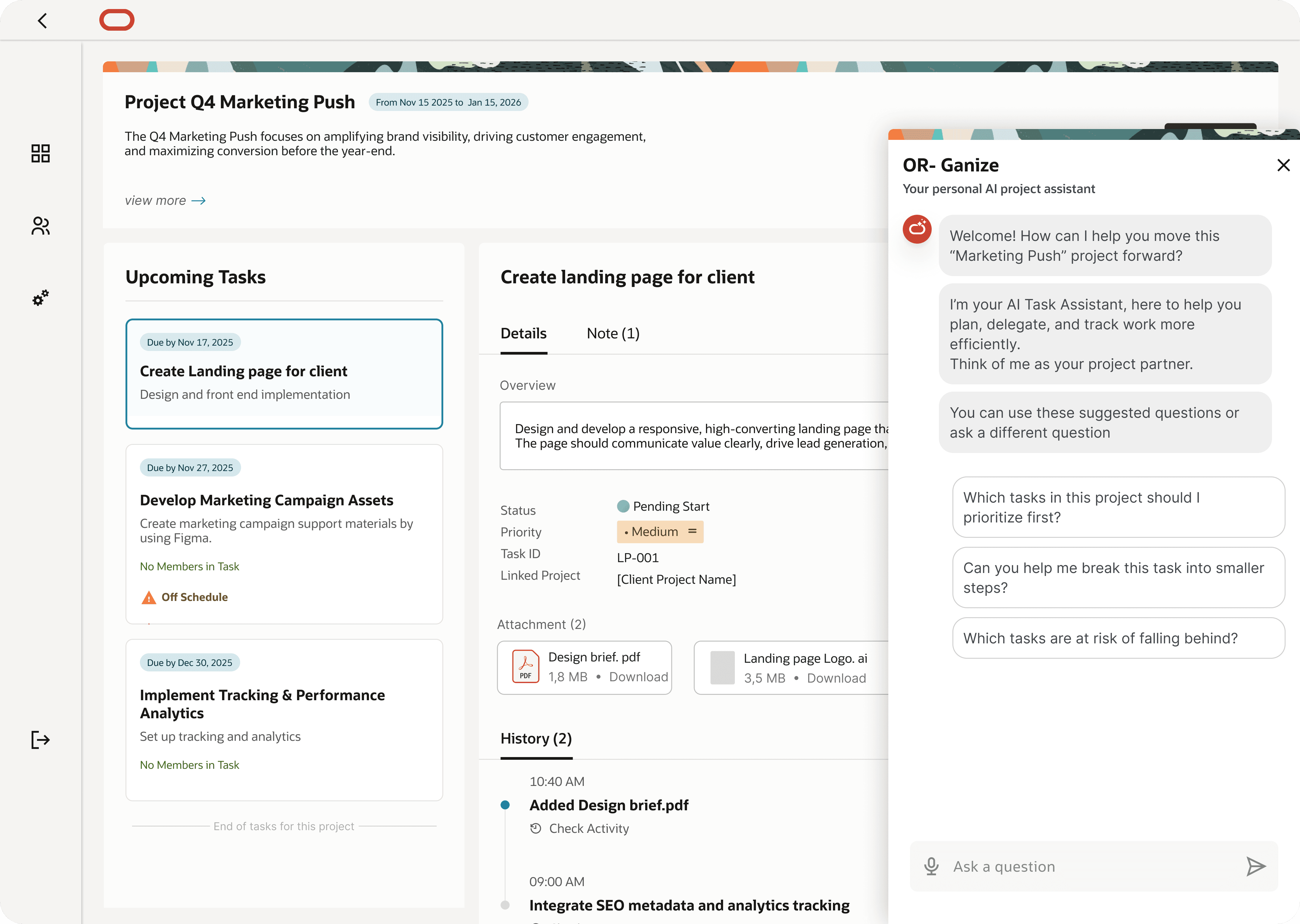
My team and I designed this tool as part of our capstone project through the UCSC × Oracle Design Collaboration.
Role:
UX designer
Duration:
Mar 2025 – Dec 2025
Team:
Tristyn Lei
Rebecca Wong
David Zhang
Project context:
As part of our capstone project , we collaborated with design team at Oracle and explored how managers make task-related decisions—prioritizing work, assigning team members, and managing resource constraints.
Since Oracle did not yet have a tool in this space, we began with research to understand real workflows and uncover opportunities to better support managerial decision-making.
The Problem
Managers are overwhelmed by information spread across multiple tools, making it hard to prioritize work, assign team and tasks, and spot risks early.
The solution
The Solution
Tool that aimed to help relieve managers by providing tools to quickly prioritize tasks, build a fast and reliant team, and catch potential hazards before they expload
The solution
Research (or- how we got started?)
We combined multiple research approaches:
The solution
What we learned?
The solution
Define the way
Before moving into design, and based on our research, we established the following design principles:
1. Transparency of Reasoning — Show how AI reaches conclusions
2. Utility of Action — Recommendations should be immediately actionable
3. Manager Control — AI outputs must be editable
4. Clarity Over Complexity — Prioritize signals, reduce noise
Ideation
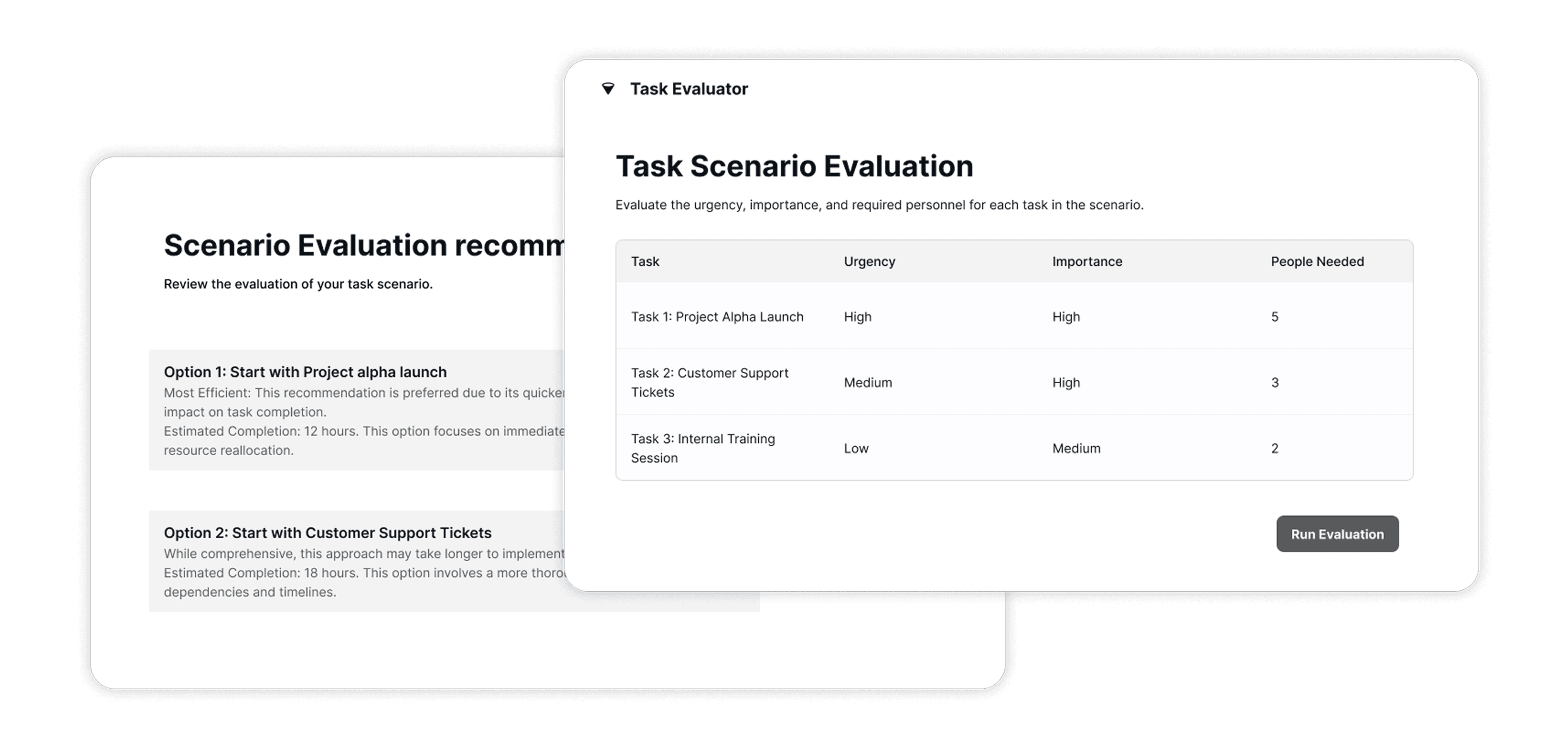
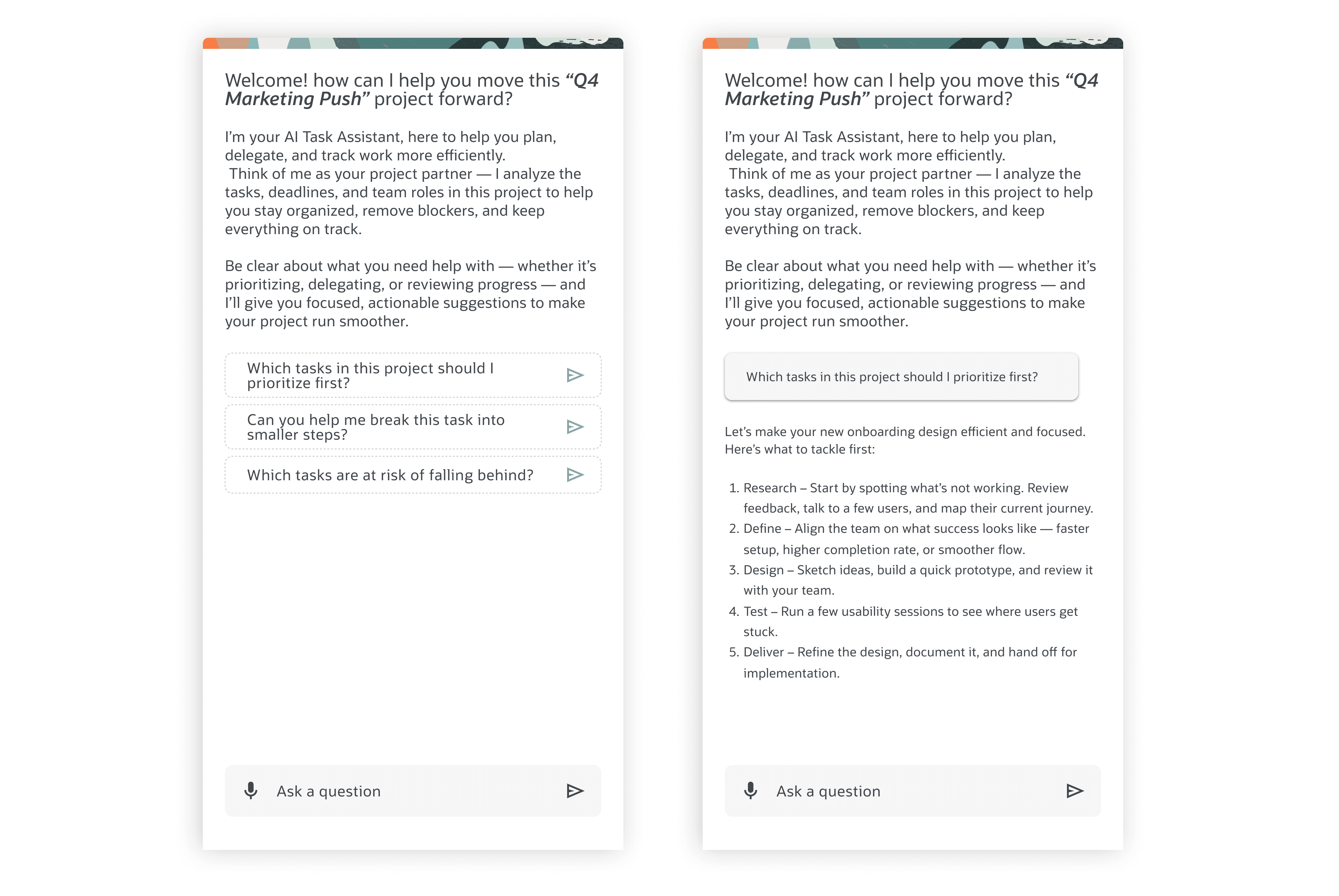
Initially, after the user research, we designed a scenario predictor for tasks, but shifted to an AI agent that managers can ask questions whenever they’re unsure about a project.
Our research showed that conversational AI is familiar in the workplace, so this approach matches managers’ mental models, reduces the learning curve, and makes the experience feel less overwhelming.
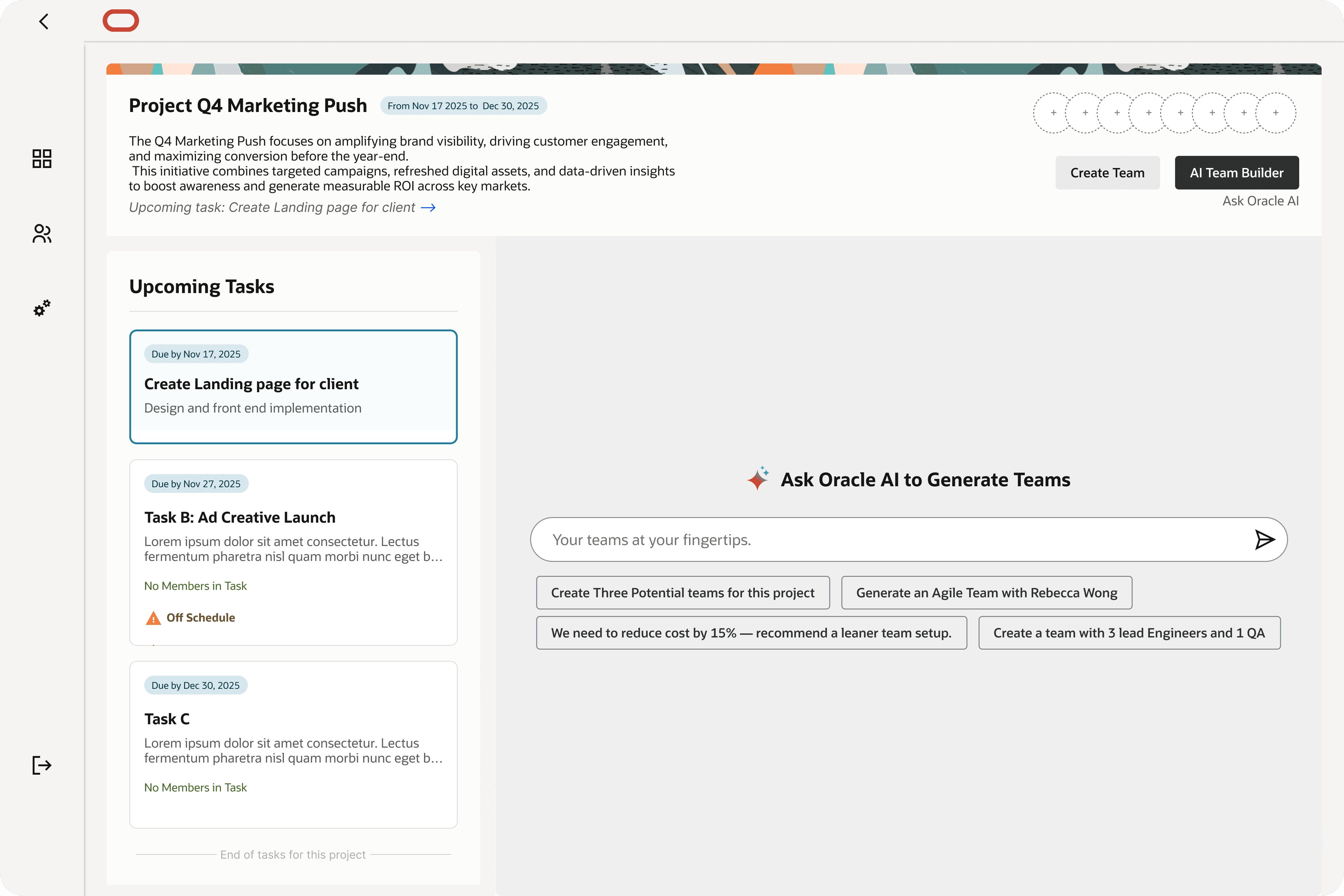
Another key idea was the team builder. We originally designed it as an AI-only experience, but insights from testing and
user interviews showed that users wanted the ability to customize and refine the team to better match their needs.
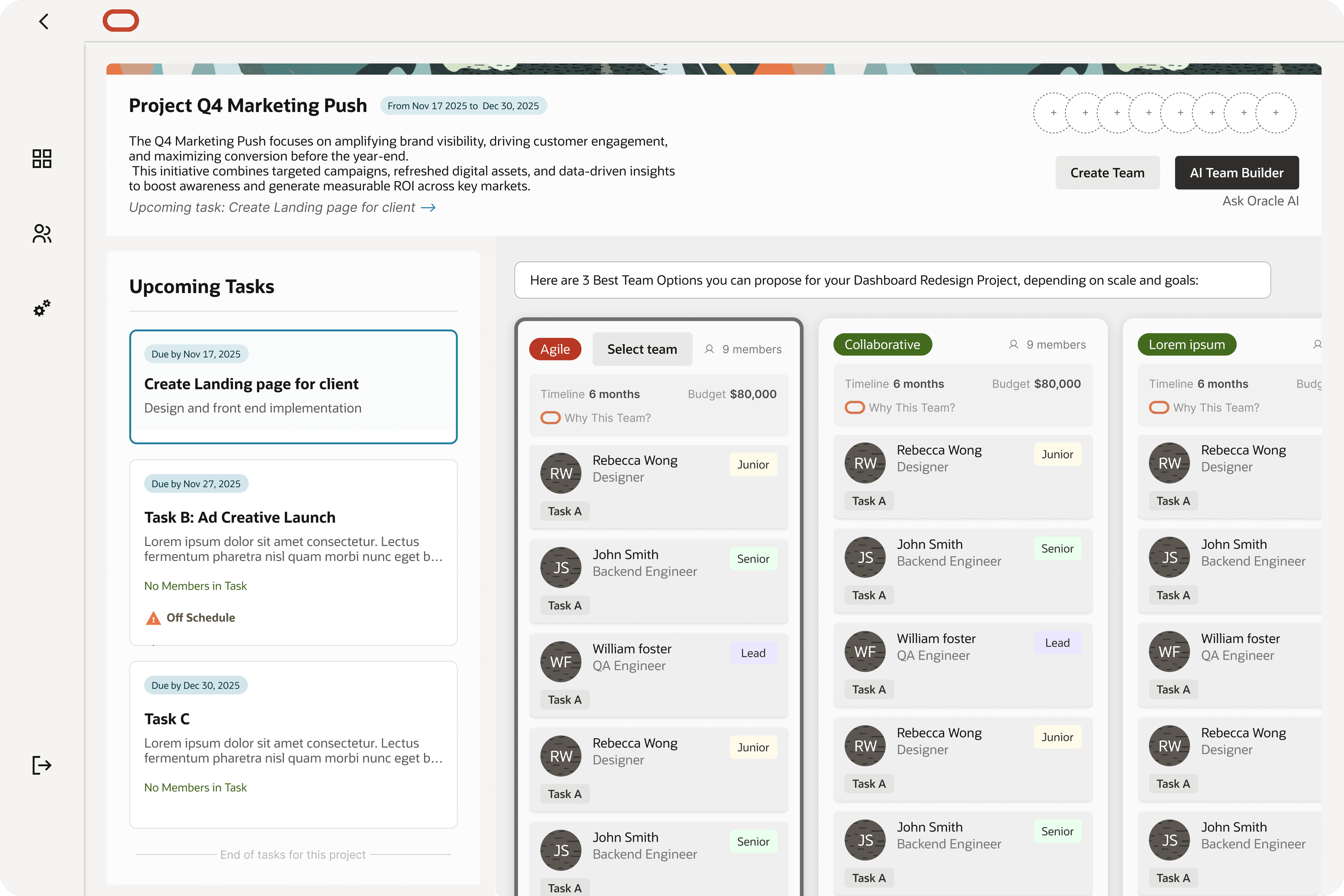
Through usability testing, we learned that presenting too much information at once overwhelmed users, and the left-aligned
tasks menu led to confusion.
Our final design
Our design solutions leveraged AI and I believe it was the right tool because managers weren’t lacking data—they were overloaded by it. AI helped pull everything together and highlight what mattered most, while still keeping suggestions transparent and easy to edit so managers stayed in control.
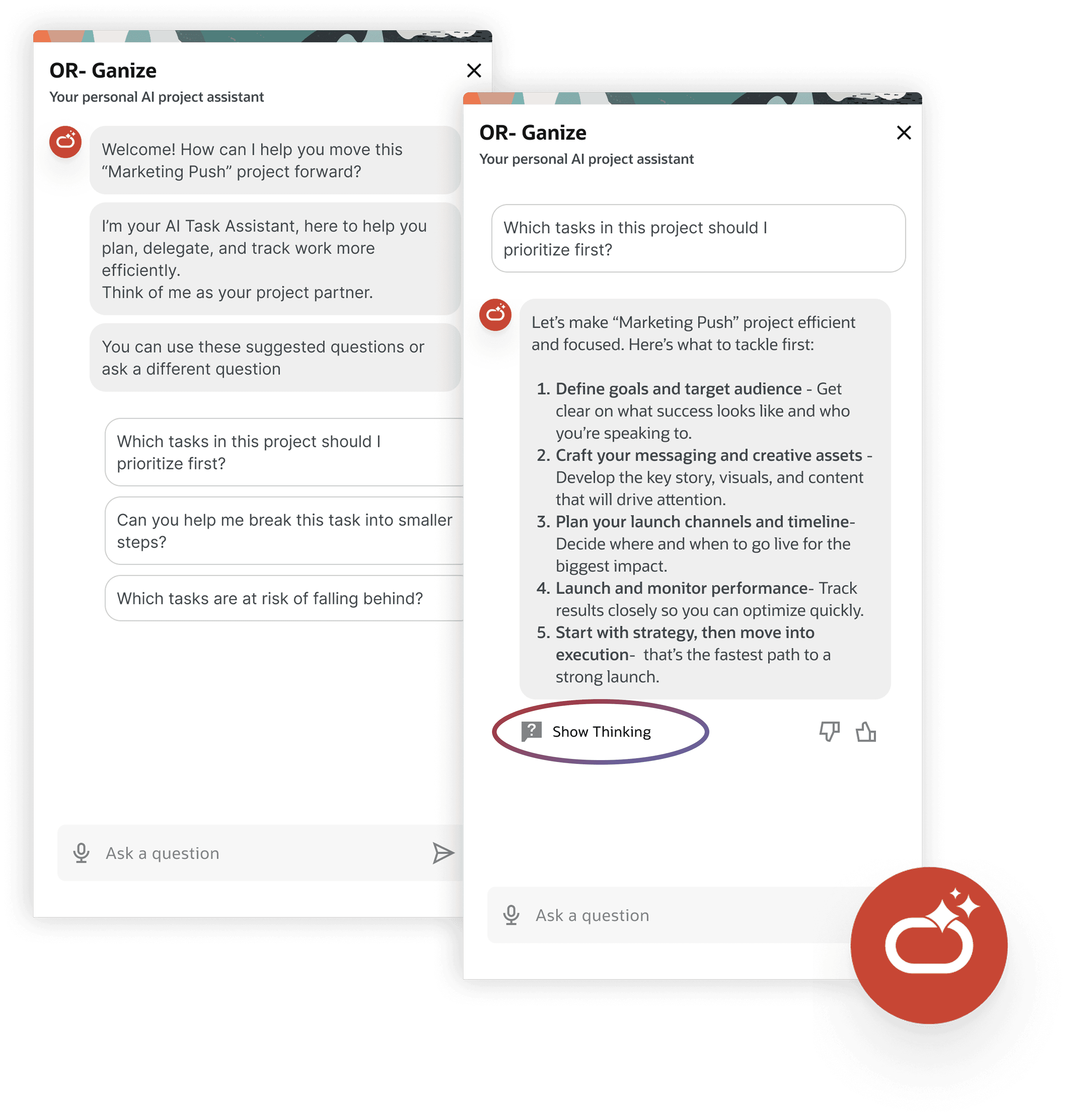
Design solution 1- Conversational AI Agent
An always-on AI assistant helps answer project questions, explain risks, and surface quick insights using simple chat prompts. By showing how it reaches conclusions and prioritizing actionable signals over noise, it builds trust without adding complexity. Managers can edit and refine every output, keeping AI supportive, not in charge.
Design solution 2- AI Team Builder
This hybrid flow allows managers to quickly generate team suggestions with a single click, then adjust them as needed. Providing multiple team options and clear signals of what came from AI versus manual edits keeps the process transparent, while fully editable outputs ensure managers maintain control over every decision.
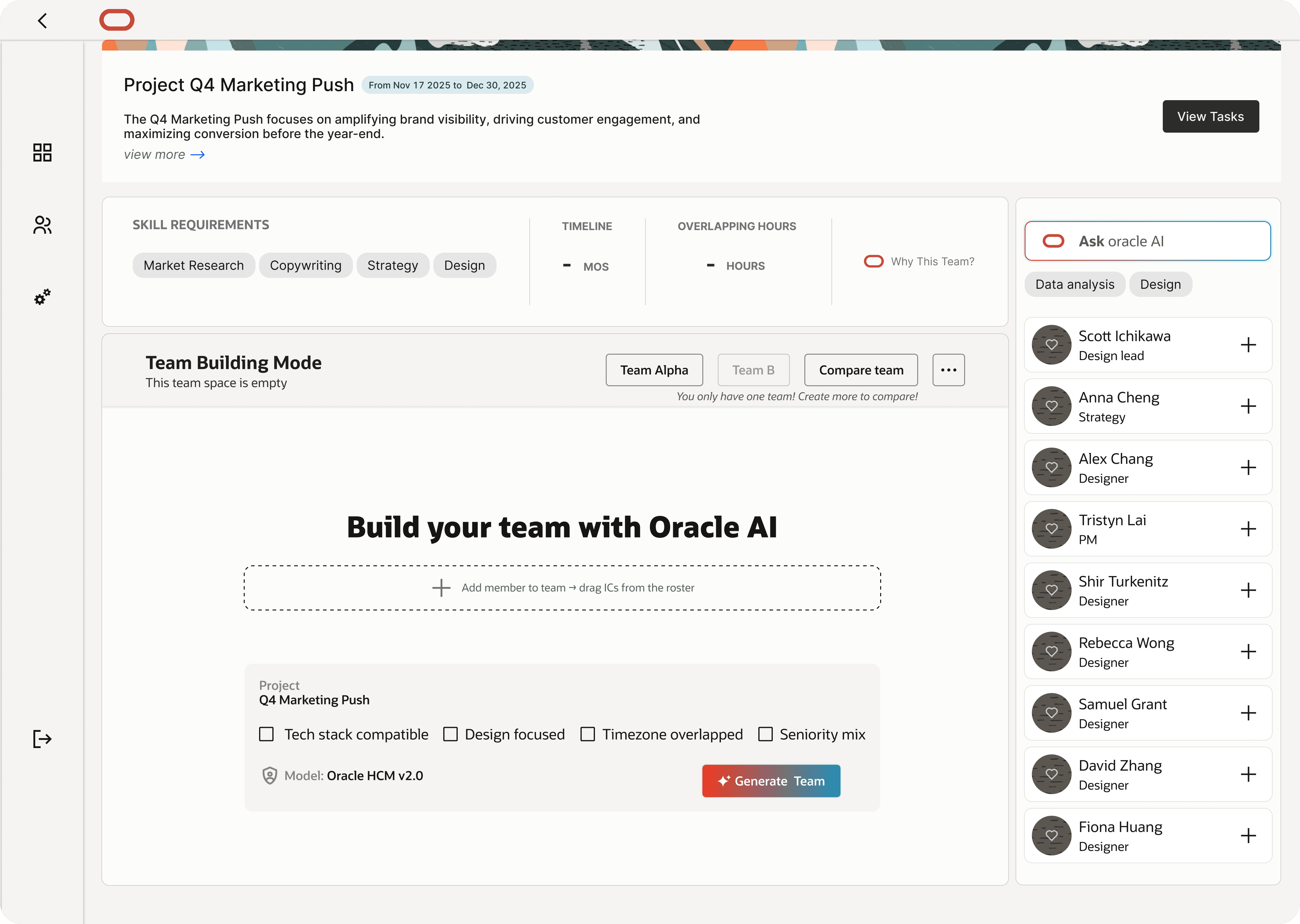
Generate team/ add manually
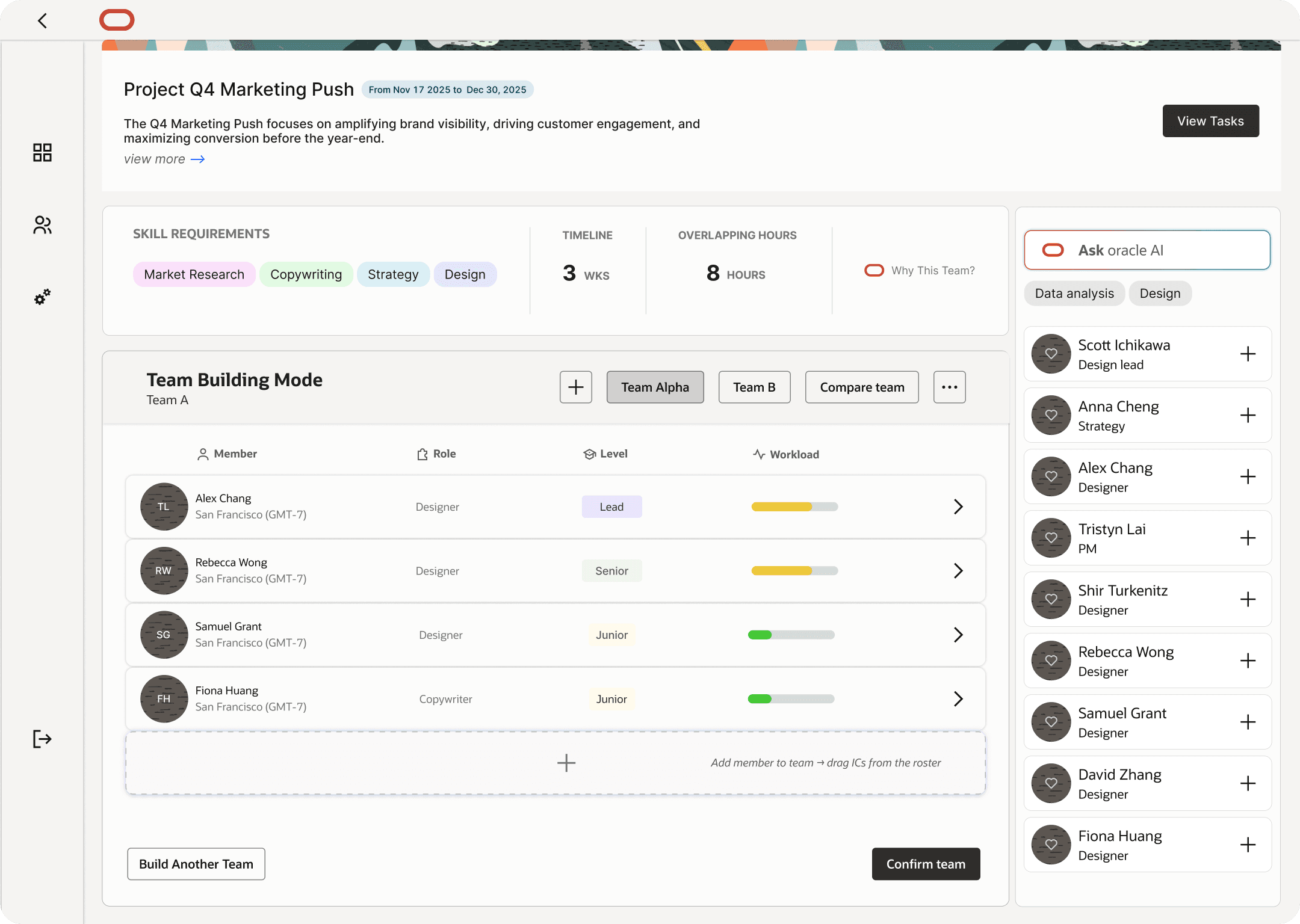
Add members/compare other teams
Design solution 3- AI alert
Instead of frequent notifications, the system highlights the single most urgent risk and provides clear next steps.
On the left- Identifies overloaded team members ,explains why a task may slip
On the right- Offers quick, actionable fixes.
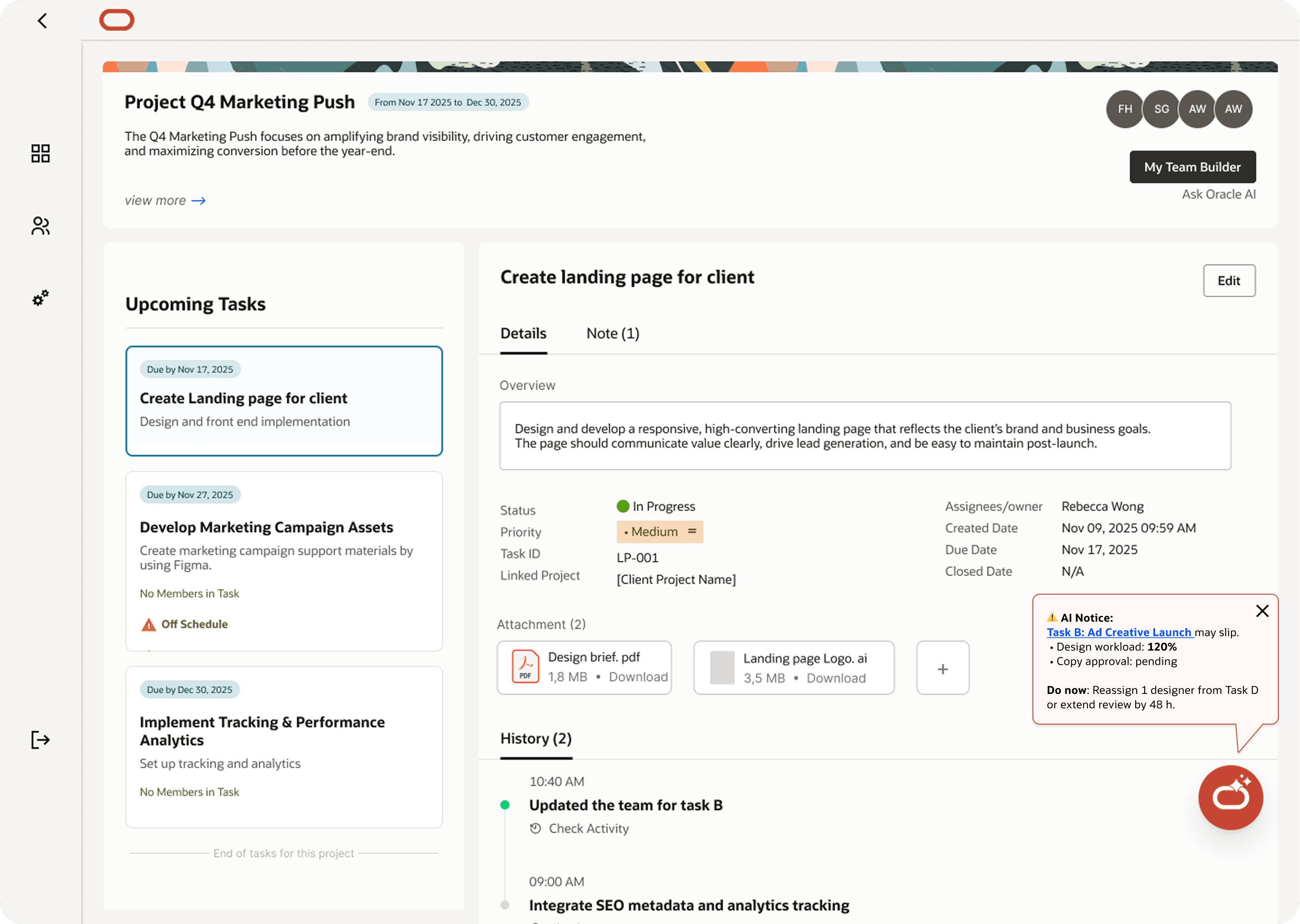
System highlight the most urgent risk
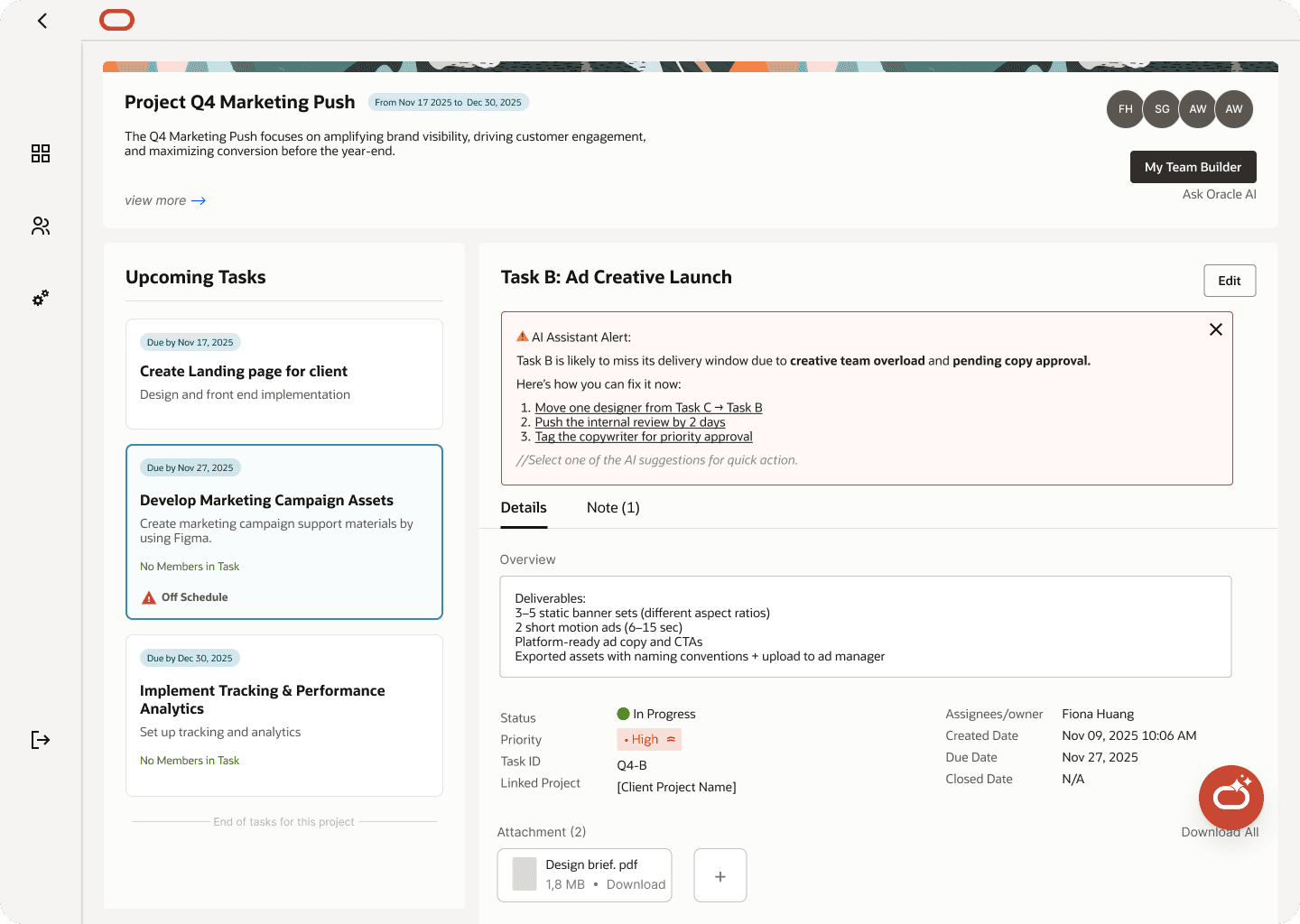
System suggesting steps to fix the risk
Final words
What I learned?
Transparency builds trust in AI features, and trust leads to more usage
Managers prefer AI as a co-pilot and want to stay in control
Fewer, clearer signals drive better engagement than constant alerts
This project strengthened my ability to design complex AI-driven systems while keeping human needs, trust, and usability at the center.
Huge thanks to our Oracle sponsors: Winston, Scott, Cara, and Alex-for their guidance and mentorship throughout this project, and to my awesome teammates, Tristyn, Rebecca, and David.
Our awesome sizzle real (music on!)